Sunday, February 16, 2014

Organization, bright colors, butterflies, & FREE.. What more is there to want in life?

I am stopping in really quick to show you my newest love, my bright desktop! Since we are currently under two feet of snow and getting more on Tuesday, I needed something colorful in my life. I figured I could start with my computer. My friend over at Mrs. 3rd Grade posted her adorable new desktop background on Instagram and I was inspired. 

So this month I created...


http://www.teacherspayteachers.com/Product/Bright-Organized-Desktop-Background-1118158

It looks so much prettier when it is on the desktop, but I love it! :) 
If you'd like to test it out, click on it for a free download. Let me know what you think! :) 

Wednesday, February 12, 2014

Falling in Love w/ Close Reading Part 2!

Well, yesterday we were unable to finish the lesson because the kids were so wrapped up in their amazing conversations over the word choice used in MLK's speech. Their inferences and interpretations were amazing, but still I was nervous for day two. Kara and I were set to co-teach the rest of the lesson today and believe it or not, it actually happened. The goal of today's lesson was to revise the main idea sentence to match the tones and emotions of the speech.  We started by reviewing the chart of main idea sentences the students came up with yesterday, along with the chart of emotional words used in the speech. Kara led the class to understand that although we charted everyone's main ideas, they basically all mean the same thing. The class chose a main idea sentence to revise: Everyone is not treated equal. We discussed the emotions that this sentence made us feel and the class agreed it was an angry sentence. Looking at our color coded chart we discussed all the words circled in blue (those were color coded for angry). Together we came up with a paragraph using the words to help explain the sentence and turn it into a paragraph. We started pretty basic to give the students a chance to go above and beyond.


Together we came up with, "During the time of MLK, African-Americans were not treated equally. They experienced injustices that made them feel not equal and angry. African-Americans felt they were living in captivity just like slaves. This is WRONG. Everyone deserves freedom.

We read through this paragraph a few times and discussed why it was better than the lonely main idea sentence we came up with yesterday. The students all agreed they felt the emotions, just by reading the paragraph and the words also helped support the main idea. We circled all the words that led us to feeling the emotions and checked they all related to being angry.

Next, the students turned to their talking partners, held conversations about how to create their own paragraphs and chose their starting main idea sentence. We made sure they all did a lot of talking before writing. At this point I thought it was going to be difficult for the students, but I was pleasantly surprised. Besides the students being SO obsessed with the content, they were really working hard. 

Kara and I bounced around the room and met with all the groups. We gave them feedback and shared some examples out loud. Kara even challenged some students to incorporate multiple emotions into their paragraph and we discussed how this could be done (see the examples below). Some students still need to finish, but the students who did finish, did awesome! 

When Kara went off to her next meeting, I repeated the lesson with my second class, the same way. They ended up choosing the same main idea sentence to revise, but together our paragraph came out different, but still wonderful. 


During the 1960s African-Americans were experiencing injustice. They felt like they were living in captivity while not having a chance to be free. Their ancestors were slaves who felt that they withered away into history unappreciated. While white people enjoyed life, they African-Americans lived in their shadow with horrible lives.

 This class also did amazing with their responses and like the first class, were full of pride! 
The E.P. = The Emancipation Proclamation.


This was my favorite response! I was seriously impressed! 

So I would absolutely say these past few days were an amazing success in the classroom. I was pushed (in a good way) to jump out of my comfort zone and try something new while having the support from my coach. This was only one chapter of the book, so I am excited to work through the rest of it. Am I Falling in Love with Close Reading? Well, if my class has fun, is highly engaged, and is learning... then I would have to say, YES! Excellent and realistic title for a great book! I think that's exactly how the coaching program is supposed to work. We work well together as a team and I am already thinking of next week's lesson to impress her with! 

If you haven't already entered, don't forget to enter for a chance to win your own copy of Falling in Love with Close Reading by filling out the form below!


If you missed part one of this lesson, check out the post about the awesome book, Falling in Love with Close Reading! HERE!

If you'd like to take a look at what we worked with this week, check out my Google Doc, HERE

Kara also blogged about a few more lessons using the Falling in Love with Close Reading book as a mentor text, HERE

It looks like it might be a snowy rest of the week for us and it is a good thing because I am EXHAUSTED! :)

Tuesday, February 11, 2014

Am I REALLY Falling in Love with Close Reading? Tuesday Tried It!GIVEAWAY!

I'm here, just like I said I would to link up with the awesome blogger, Holly, at Fourth Grade Flipper for her linky, Tried it Tuesday! Yesterday, I explained that I was going to watch my LIT coach, Kara, use a new close reading strategy, but with schedule conflicts, I actually had to teach the lesson before she was able to come into the classroom.We were then able to co-teach the other class. I was so nervous because I didn't feel comfortable with this new strategy and was confused as to the point of the lesson, but I couldn't have been more wrong.

Close Reading the famous "I Have a Dream" speech is no easy task no matter what strategy you choose, but while focusing on the word choice lesson from Falling in Love with Close Reading, it proved to be hard, but meaningful! Obviously MKL's speech is very long, so I decided to shorten the speech into three sections. Today we focused on just the introduction, which the students were unfamiliar with. I copied it, cut it to fit into their notebooks, and began the lesson. Together we picked a stopping point and read up to that point. We turned and talked to our talking partner about the main idea of the section.


I charted the ideas and we discussed how most of us had the same main idea of the short selection. We then discussed that the author is doing his/her job correctly if everyone gets the same idea from reading/listening to his/her writing. In order to get the audience to interpret a similar meanings, it is all about word choice. Instead of discussing content at this point, I played the song (from youtube), Best Day of My Life, by American Authors. The classes really love when I incorporate music, art, technology, or anything else fun into the lesson, and their reaction was just as expected. I asked the students to discuss with a partner what this song was about and how it made them feel. They came up with words and phrases that supported their answers and it led to a great conversation. I was shocked when the kids started relating the song to MLK and his speech. One student was so excited to realize the song's lyrics said, "I had a dream..." just like MLK's speech! While others discussed and debated that the song could be from MLK's perspective about how if he was alive now, he would "never wanna look back" because the present time is so much better than the past. We also discussed the words that were used to relay the message to the listener and why the song writer chose those words. This only lasted a few minutes, but was very beneficial, got the kids engaged, and served a strong purpose.

From there we selected words that stood out in MLK's speech and highlighted them in the text. I charted the words as the students told me their choices. There are certain steps to follow while using this strategy from Falling in Love with Close Reading and the next step is categorizing words. We looked for words that provoked strong emotions, strong images, and clear ideas. The first emotion that was brought up was anger. We color coated all the words that brought up that emotion in blue and continued to categorize until all the words were used. Some words were sorted through whole group, partners, and individual thinking. We also learned that some words could fit into multiple categories as long as you could explain why. This may sound like something simple, but I was BLOWN AWAY by the students understanding of word choice from this activity! Falling in Love with Close Reading gives suggested sentence starters to help students express their thinking while supporting their thoughts with content. ALTHOUGH we only read four sentences up to this point my students learned SO much. We turned and talked, had class discussions, and piggy backed off of each other's ideas. We tried the answer frames as a class and these are some of the responses I heard...

"Some words fit together like injustice and not free and made me feel guilty because African-Americans suffered in history from being enslaved to being forced to attend different schools, they were never looked at as equal."

"Seared, flames, captivity, slaves, and withering are all depressing words because it symbolizes how we had treated African-Americans for hundreds of years and it is wrong."

and my favorite...

"The author could have used 100 years repeatedly, but used "5 score years" because he wanted to connect his speech to Abraham Lincoln's speech about the Emancipation Proclamation and the end of slavery. He wanted to continue Abraham's revolution and finally free African-Americans. MLK appreciated the work Abraham Lincoln did and by "symbolic shadow we stand today" it means that MLK was giving his speech in front of the Lincoln memorial for a historical and meaningful reason."


That last answer was an amazing discussion followed by a ton of students piggy backing off of one another and coming to a conclusion. The students were SO proud of themselves for getting SO much information out of four sentences and were begging to go on, BUT we ran out of time.  We will be continuing with this strategy tomorrow and moving onto a patriotic graphic organizer from Jivey's February & March Graphic Organizer pack to find the message/theme of the whole speech. It will be perfect to work on while celebrating President's Day.

I am so thankful for a supportive coach, Kara, without her forcing me (hahaha) to take this risk, I wouldn't have had this experience. Thanks Kara! :)


Want to check out this new strategy and implement it into your classroom? Since we found this book so helpful, we want to give one away! We are giving away a copy of the new book, Falling in Love with Close Reading! Fill out the Raffle Copter below for your chance to win! :)

http://www.amazon.com/Falling-Love-Close-Reading-Texts--/dp/0325050848/ref=sr_1_1?s=books&ie=UTF8&qid=1392146923&sr=1-1&keywords=falling+in+love+with+close+reading
Disclaimer:I have no affiliation with this book and they did not ask me to write this post. :)

Monday, February 10, 2014

Falling in Love with Close Reading! Academic Reading...What are you reading?


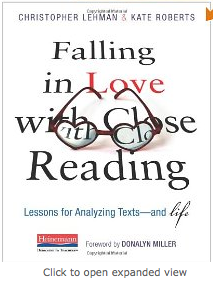
http://www.amazon.com/Falling-Love-Close-Reading-Texts/dp/0325050848I don't know about you, but I am constantly reading new educational books, blogs, and articles in order to become a better teacher. I love learning new strategies and skills to not only help me, but more so help my students. The new book, my literary coach, Kara, and I are reading is Falling in Love with Close Reading, by Chris Lehman and Kate Roberts. Our principal actually bought the whole staff a copy of this book because she loved it so much. I haven't finished it yet, but honestly with a forward from Donalyn Miller, the Book Whisperer, this book HAS to be awesome. Kara has been teaching some lessons from this book in another classroom and tomorrow it is my turn to team teach with her. I am super excited to help the students to "look through the lens" (like the book teaches) and closely read parts of Martin Luther King, Jr.'s famous speech. 

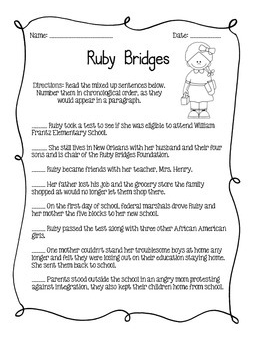
This is one of the worksheets we will be using in the lesson.  I can't wait to tell you how our lesson went, show off some student work samples, and give you some freebies...tomorrow!


Do you have any suggestions for educational books? I'd love to hear what worked for you.


Friday, February 7, 2014

Five for Friday, Opinion Writing & Chocolate!


Hooray! Friday is here! TGIF!  That means I can link up with Doodle Bugs! I am SO ready for this weekend although I had a lazy week! We got hit with TWO more snow storms here in Connecticut and had Monday off, a two hour delay Tuesday, Wednesday off, a two hour delay Thursday, and ended the week with a full day, today, Friday! Believe it or not, we still worked very hard and accomplished quite a bit. I know I was motivated and excited to teach and I could tell my enthusiasm spread over to my students. I can't take credit for all of the awesomeness in this post because THIS POST, from Jivey, inspired my lesson plans for the week. I fell in love with her new Graphic Organizer Bundle and knew I needed to test them out. I also loved her idea of using chocolate for an opinion essay!

We are currently learning opinion writing. I like to start teaching this type of writing by having the students create opinion paragraphs. Once the paragraphs are well written, supported with text evidence and backed up with opinions, we move into five paragraph essays! I started out reading two different articles about dark chocolate. This was Jivey's idea and boy was it a good one. My student's had NO IDEA that there were pros and cons to eating dark chocolate. I also learned that while making photo copies, if I copy at 85%, the copies fit into our composition notebooks we use for Reading Notebooks. This has been an amazing discovery because I like my students' notebooks to be meaningful for the students to use as a way to look back and reference material. Students read the articles in pairs, while I worked with a small group, and then we all discussed and highlighted the three most important ideas from each article.


Next, we worked with a partner rephrasing the highlighted material into our own words. We made it short and to the point so it would fit with three separate bullet points in our graphic organizer.  I wanted the students to be able to understand both sides of the argument before taking a stance so this graphic organizer was  perfect for my lesson. I also LOVE how the adorable organizer had the objective of my lesson right on the paper! The students loved coloring in the hearts when they finished their work.

When each partnership finished, we came back together as a class and discussed what everyone wrote down for their bullet points. We realized that almost everyone had written the same three facts down for both articles. Phew! This meant they were on the right track! We discussed the text evidence and I called on students to explain why the evidence mattered and what it really meant. We then played the stand up game of "two sides" for a debate. Students who thought dark chocolate was healthy went to one side of the room and students who thought dark chocolate was hazardous went to the other side. The students had a good ol' debate and the kids were allowed to transfer sides at any time, but had to explain why. Once the students were ready to commit to a stance, they stayed in the groups and developed a thesis statement together. I was BLOWN AWAY when one of my strugglers came up with, "Eaten in moderation, the flavonoids can certainly have health benefits." The academic vocabulary and precise language from the article in that thesis statement was amazing! I was so thrilled I gave him a PRIDE sticker and he beamed!

I then showed the students what we were going to write our thoughts down on and they freaked out, like I secretly hoped they would. They are used to me being very creative with lessons, but this was something new. The other night I created an Opinion Paragraph Brochure/Pamphlet to go along with my Opinion Unit. It actually took me three hours because I am a perfectionist and really wanted this to be meaningful, fun, and serve a purpose. I copied the file back to front and enlarged it on legal paper. When I handed it out, I heard a ton of "Ohhs and Ahhs" and "We get to write on THIS!" It made me happy! I taught them how to fold the brochure and they got to work. The best part was that EVERYONE was engaged. At the beginning of the year, I had some students that would cry when trying to write. Clearly a lot has changed.

http://www.teacherspayteachers.com/Product/Outstanding-Opinions-An-interactive-scaffolded-approach-to-opinion-writing-1098135

http://www.teacherspayteachers.com/Product/Outstanding-Opinion-Writing-Pamphlet-Graphic-Organizer-to-write-a-paragraph-1099992

http://www.teacherspayteachers.com/Product/Outstanding-Opinion-Writing-Pamphlet-Graphic-Organizer-to-write-a-paragraph-1099992

Aren't they adorable!? When the students finished them, they were ready to use this as a plan to write a five paragraph essay! Next week we will continue to use these as a reference (before bringing them home to show parents) and will write a new opinion piece on a different topic. I also can't wait to test out some more of Jivey's Graphic Organizers!


I am also thrilled to announce that I finally finished updating my Revolutionaries packet, just in time for Black History Month. This awesome nonfiction packet features nonfiction articles and activities for: Ruby Bridges, Sojourner Truth, Rosa Parks, Martin Luther King, Jr., Jackie Robinson, and Susan B. Anthony. We are just starting this unit and I know I will be using everything in this packet. I created activities for each article, an end of the unit quiz, a biography template pamphlet, and TONS more!  Make sure you check it out! :)

http://www.teacherspayteachers.com/Product/Black-History-Month-Packet-Revolutionaries-of-the-Past-w-MLK-Ruby-etc-1105789


http://www.teacherspayteachers.com/Product/Black-History-Month-Packet-w-Martin-Luther-Sojourner-Ruby-etc-516612

http://www.teacherspayteachers.com/Product/Black-History-Month-Packet-w-Martin-Luther-Sojourner-Ruby-etc-516612

Have a wonderful weekend! :)
Wednesday, February 5, 2014

Workshop Wednesday! Finishing up Figurative Language with Poetry!


http://ideasbyjivey.blogspot.com/I'm excited to finally be able to join in on the Workshop Wednesday fun with my girl, Jivey!

I teach ELA twice a day to two energetic 4th grade classes. Maybe I'm an odd ball, but I absolutely LOVE teaching writing. I love encouraging students to share their creativity with me and I love seeing reluctant writers produce multiple pages with a huge smile on their face.


http://www.teacherspayteachers.com/Product/Figurative-Language-OWL-Theme-Posters-503955We just finished up our animal unit and worked a lot with figurative language.  I know I posted a lot about this unit, but it seemed to go on forever. At first the students couldn't even tell me what figurative language or Author's Craft was. I'm sure they learned it in the past, but they insisted they were clueless. I started off putting up my figurative language bulletin board. Believe it or not, my students actually read the things I post on the boards. This proved to be very helpful for them.


http://www.teacherspayteachers.com/Product/50-Figurative-Laguage-TaskFlash-Cards-Partner-Small-Group-Intervention-546948For morning work I had my students work in groups working through the task cards a few days a week. This was the perfect morning work activity because my students all arrive at different times. This was also low prep. I didn't have to run around copying papers before school for morning work. They love quizzing each other, it keeps them quiet, they are engaged, and they are learning.  Win/Win!

While working on this project, the student's shared their work with me via Google Docs. I logged in and provided each group with feedback and they kept editing and revising their work until they were pleased with the end result. The students shared their poems with the class via the Smart Board and the class discussed the nonfiction facts they learned about the animals. Overall, the lesson was excellent and the students even asked to do it again. We are just finishing up the rest of our animal poetry. We worked in Google Docs on our Chrome Books in class with groups. We read nonfiction articles about animals, researched for more information about the animal, took notes, and created a poem portraying the researched animal. Students were to add figurative language and use strong word choice. While working on this project, the student's shared their work with me via Google Docs. I logged in and provided each group with feedback and they kept editing and revising their work until they were pleased with the end result. The students shared their poems with the class via the Smart Board and the class discussed the nonfiction facts they learned about the animals. Overall, the lesson was excellent and the students even asked to do it again.


Here are a few student examples from Google Docs. I love how they tried to incorporate the nonfiction facts into the story, like our mentor texts Verdi, Pinduli, and Stellaluna all by Janell Cannon.


We were also able to work with Jivey's awesome Idiom packet, which the students LOVED.

http://www.teacherspayteachers.com/Product/30-Idioms-Interactive-Notebook-Activities-Centers-Posters-and-Assessments-1066577

Unfortunately, I wasn't able to print these fun posters out in color because our school's color printer broke, but the foldables were awesome resources for my students' notebooks! You will hear more about this Friday when I have pictures to share! 

This week has been odd....snow day Monday, two hour delay Tuesday, and a snow day today, Wednesday!


Sunday, February 2, 2014

Why the Question is More Important than the Answer! #Q-Focus Strategy

http://www.amazon.com/Make-Just-One-Change-Questions-ebook/dp/B00ELV5Y5A/ref=sr_1_1?ie=UTF8&qid=1391346590&sr=8-1&keywords=Make+just+one+changeMy school is made up of just 4th and 5th grade. Together there are 18 classes. I love this set up because we are an elementary school, but provide many opportunities for students to work on and achieve responsibility through after school activities, choices and classroom lessons to prepare them for middle school. The Question Formulation Technique (QFT) I used in my class this week was a perfect way for students to show their responsibility of learning. One of the new educational books I started reading this year, with my Coach, Kara, is Make Just One Change, by Dan Rothstein and Luz Santana. The strategy made SO much more sense to me when I was able to discuss and test out the technique with colleagues and immediately my brain began turning as I thought of ways I could test it out in my classroom. If you know me, you know I LOVE to try new techniques, strategies, and ideas. I consider myself a motivated risk taker. This year I made it a personal goal to have my students take ownership of their learning through questions that drive their instruction. Not an easy task, if you ask me, but I was determined and with the help of our ridiculously smart reading specialist, Kara, I am able to have support and encouragement along the way. 
 
Make Just One Change, recognizes two facts:

  • All students should and can learn to formulate their own questions
  • All educators can easily teach the skill as part of their regular practice
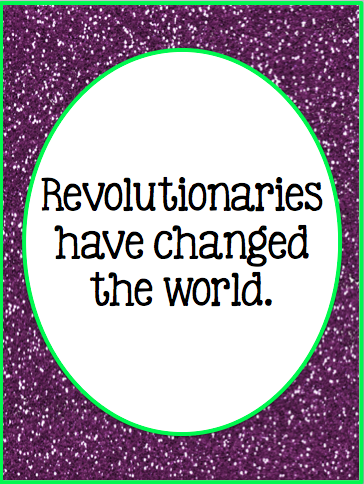
After reading and understanding those two facts, this strategy sounded like a perfect plan to me! The first step to using this questioning strategy in the classroom is to develop a Q-Focus or a Questions Focus. Since this was the introduction to our new unit, the students didn't really have much background knowledge on the topic. I told the students that we would be trying out a new technique through questioning. The questions they came up with today would allow me to create lessons for the unit. They were so excited to "know" they had a part in what they were going to learn. The Q-Focus I came up with was "Revolutionaries have changed the world." 
To prepare and save time, I wrote the statement in Word, with large print, and copied one for each group. I taped the statement to chart paper, creating a poster for each group. I allowed the students to each choose a marker for this lesson. I explained that while I walked around, I should see the poster filled with colors from each group member's marker. This held the students responsible for participation in the lesson, allowed me to see who wrote what, and I was able to pinpoint who understood questioning and who needed more help with the concept. (FYI: I noticed my smelly markers were a huge motivator for this exercise, the more the students wrote, the more cherry, mint, chocolate, lime, or blueberry filled the room.)  


Once my students quickly assembled into their prearranged groups, I reviewed the rules on the Smart Board, set a time limit of five minutes to allow the students to quickly write as many questions as they could about the statement, circulated through the groups, and watched as the level of engagement and rigor rose in the room! I reiterated out loud that spelling did not matter and I was just concerned about everyone getting their thoughts out on the paper. 

While walking around observing my students I realized that I have either underestimated their questioning ability or have taught them a lot in the past five months. (I am going to pretend it is a mix of both!) Every student was able to ask questions! The day before this lesson, I received a new student from Brazil, she was even trying her best to write out questions! The students were following the rules amazingly, sticking to the time limits, and working together so well that I wanted to jump up and down and scream "Hallelujah!" Instead, I just grabbed my camera and took pictures of the students in action. 


When the timer went off and it was time for the students to move on to the next step, everyone listened to directions attentively. The next step was to number the questions. This step only took 2-3 minutes. I explained it wasn't a competition between groups, but instead "it just gave us satisfaction about how awesome we were for just coming up with ___ questions in five minutes about one statement!" After numbering, I gave the students another two minutes for each student to code their questions with an "O" for an opened question or a "C" for a closed question. I briefly reminded students the closed questions are usually one word answers like; yes, no, a date, time, or a person's name while an opened question requires more of a response. Both questions are perfectly fine at this point because we needed to build some background knowledge on this topic. The next step involved the students working together. Each group was to come to a consensus choosing the three most important questions from their chart paper. I made sure the students knew it wasn't a contest and did not matter whose question was chosen, but rather what questions were the best. Each group had four minutes to pick three questions, circle the questions and meet on the tech carpet.


Finally, it was time to discuss. Up to this point I really did not do much talking during the lesson, basically I was playing
a different role. I led students to value their own thinking. This process of teaching students to ask their own questions allowed the students to communicate what they needed to around curriculum. The difference is that the students were thinking and doing more, rather than me, the teacher.


Together, we gathered on the tech carpet and each group presented their three circled questions. They briefly explained why they decided these were the most important questions as I typed them onto the class list. (Since I teach two classes, I have two class lists.) I promised the students that all of their questions would get answered before the unit ends. We made some observations while looking at the list. The students noticed the same question repeated multiple times, and we discussed why that would possibly happen. The students agreed that must be an important question.
I am going to use the poster maker to blow these lists up and as we go through our next unit, students will check off the questions as we answer them. Therefore, the students are generating my lessons through their questions!


As I was observing my students become so involved in this process, I was so excited to write this blog post to share my success. Not only are my students wicked excited about their new unit on Revolutionaries, but now I have a sense of where to go with my lessons and how much the students know about the topic. 

This strategy worked out awesome. I would definitely use it again. It didn't take longer than 30 minutes and I was able to learn so much about my students during that time. 

Since this technique was so motivating and powerful it should fit perfectly into my friend Joanne's linky, over at Head Over Heels for Teaching.

http://www.headoverheelsforteaching.blogspot.com/