Saturday, November 21, 2015

Force & Motion: Using Gradual Release to Foster Independence: WritingScientific Claims

So as you know, if you've checked out my blog this year, I am teaching Science and Social Studies this year, while Robyn is teaching ELA. At first I was in shock and I think I actually cried about it, now I am SO thankful for the change. It is a whole different way of thinking and teaching and I love learning right along with the students. This subject area switch was a huge change for me since  I had to replan lessons, units, and my year. We teach Science everyday for a unit and then move on to Social Studies for a unit. This allows us to get the most 'bang for our buck'. ;)

So anyways...this year we started a book study reading the book, What's Your Evidence? Engaging K-5 Students in Constructing Explanations in Science and it has been super helpful. We are trying to get our students to write independent scientific explanations using data from investigations. We are focusing on writing using a claim, evidence, reasoning frame. My favorite part is writing about and understanding a scientific principle because it really shows student understanding. We started testing out some techniques in class last week and my students have taken off with the idea and are doing amazing. They are so engaged and it is showing in their awesome explanations.

Today I am going to quickly talk to you about claim writing. Now obviously I am no expert since this is my first year teaching this way, but after teaching my three fourth grade classes while using this method, I feel like I know a thing or two. So here is how my experience has been going. 

I am a firm believer in that the more effort you put into explaining a new concept, format, or expectation, the better your students will preform when completing a task independently. Basically, the more time you put into your teaching, the better quality work you will see. Therefore, I started teaching the scientific explanation over a number of days. I want to make sure my students actually take the time to understand what a claim is. I want them to be able to put Science into their own “kid terms” and use evidence and scientific principles to back up their investigations.

https://www.teacherspayteachers.com/Product/Science-Force-Motion-How-Does-Force-Affect-Motion-Scientific-Explanations-2234133We did an investigation call the Box Push, which an be found in my new product. It includes three different scientific investigations on Force and Motion, lab write ups, explanation answer frames, scientific principle lists, and example anchor charts! I am super excited about this product because it has changed my life as a science teacher making me feel more confident and successful while teaching.

For the Box Push Scientific Explanation, we started with groups of students developing claims. We discussed the word claim and came up with a definition of- “Your own words of what the investigation was trying to prove.” I created a list of all the claims the groups reported. After listing each group’s claim on the board, we talked about them. Were they in kid friendly terms? Were they directly related to the investigation? Were they too similar to a scientific principle (scientific principles are on a bulletin board in my classroom, they change depending on the standard we are working on)?
Each group then had a chance to vote on a claim to use and explain why they would use it. I was happy to see that most groups even changed their answers after they listened to the others. In the example above, the most popular claim was: The more people applying force, through a push on an object, the father is should travel, in a given amount of time. Sounds good, doesn’t it? Once students felt comfortable with a claim, they wrote it down on their answer sheet. They then started to analyze the evidence. Although we completed this investigation a few weeks ago, I gave them fake evidence, so we would all have the same data.

I hope this helped you think about Science in a different way. I always tell my class, "Great scientists need to write down their data and information clearly and specifically so other scientists can repeat and learn from their investigations." My students LOVE Science class and come in ready to explore, investigate, collaborate, and learn.

Come back tomorrow to learn how we use data, inferences, and collaboration to write about our evidence! 

Monday, October 26, 2015

Sharpening pencils in style!

It's here! It's here! I am super excited to be posting about my new classroom addition. This little device has made my mornings flow smoother, quieter, and brighter!

I was so exited to be chosen to test out the new color, but when I found out it was PURPLE, I was even more thrilled! My students absolutely love these sharpeners! I've bought one for the past two years, so the purple added to my collection. I now have three different pencil sharpening stations (my purple, red, and blue). Students don't even use my loud and obnoxious electronic sharpeners unless there is a line at one of these guys. My custodians are happier because there is much less of a mess with these hand sharpeners compared to the electronic pencil chompers and the kids are happy because not only are their pencil tips wicked sharp, but it doesn't eat half of the pencil in the process!

Check her out! Isn't she a beauty?!


I've even had students from last year's class stop by my room in the morning to sharpen their pencils because they miss the sharpener! They were thrilled to see our new addition! Honestly, if you don't have one of these, you need one!

Want to see it in action? Check out my Instagram post or my Facebook page for a video!

Would you like some more information? Check out Classroom Friendly Supplies! It is owned and operated by a teacher! Couldn't get any better than that! Thanks again Troy for my new purple present!


Saturday, October 24, 2015

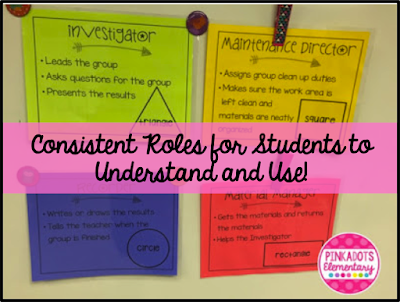
Consistent Roles for Students to Understand and Use! (Freebie)

I have a million and a half things to blog about, but I haven't had a free second. Now that I got the
kids in bed, turned up the heat, and can relax while smelling my lovely apple candles I am finally sitting down to write a blog post in what seems like FOREVER! So my apologies for being gone for so long, but I've been living life, creating Social Studies and Science lessons, and running around after my kids.

I've written this post at least ten times in my head, but I am finally typing it out because I am so excited to share a new routine we put into place this year. For those of you who do not remember, I am teaching Science and Social Studies, while Robyn is teaching ELA this year.

We just finished a month long unit of map skills, which the students LOVED. We used my two Map Skill units that I put on TPT this summer. They were fun, informational, and entertaining for my fourth graders. I never thought I'd actually enjoy Social Studies, but I sure did have fun teaching the first month of school. If you teach map skills, you will want to check these out!

https://www.teacherspayteachers.com/Product/Map-Skills-I-II-Units-1-7-No-Prep-Scales-Grids-Longitude-Latitude-2032533

https://www.teacherspayteachers.com/Product/Map-Skills-I-II-Units-1-7-No-Prep-Scales-Grids-Longitude-Latitude-2032533

So we started Science in October and our first unit is on Force and Motion. 


I knew I wanted the students in cooperative groups, so I changed the room around. I put desks into groups of four and assigned everyone a role. The first day of our new unit, I explained the roles and had the students record the different roles in their Science Notebooks, as a place of reference.

https://drive.google.com/file/d/0B2-X5UXmZTN4WkE5eW4zNG84Q0E/view?usp=sharing

I also used Velcro to attach a laminated, color coded, role to each desk. I wanted them easily removable because roles will change with each investigation. The students were excited for their new responsibilities and ready to get down to business. Talk about motivational! There is no arguing about jobs. Before class, if we are starting a new investigation, I simply change the Velcro roles myself. The students love knowing their role and I am really enjoying them take on their tasks so seriously! I buy my Velcro dots in bulk from Amazon. I also use Velcro dots to attach my name tags to the desk. Teaching THREE classes of students daily gets crazy sometimes. Velcro allows me to move students by a simple change of a name tag instead of dragging a desk around the room.


We are using an adapted version of the 5E model for Science and so far, I am really enjoying it. I LOVE seeing the students use self discovery during investigations and I am so excited to be able to give my students hands on/creative opportunities. I cannot wait to share more about our Science lessons.

Want to try out some group roles in your classroom? Click here to grab these for free! I printed them on colored paper and made the poster's color correspond to the same colored shapes.

Thanks to my sweet friend, Joanne, for hosing this motivational link-up every Saturday!

http://headoverheelsforteaching.blogspot.com/2015/10/spark-student-motivation-scan-to-win.html


Saturday, September 26, 2015

What's Inside My Teacher Bag...Linky!

I am so excited to participate in this fun link up that Tammy came up with about the contents of teacher bags. I have a little teacher bag that holds EVERYTHING I need. Sometimes I feel like Mary Poppins because it is like a bottomless pit! My husband does not believe what I pull out of it every night!


I will start out by giving a shout out to my BBB, Jessica, who sent me this gorgeous blue Vera teacher bag and some awesome school supplies!  Thanks girl! 

Like many of you all, I am a school supplies hoarder. I love pens, pencils, markers, notebooks, paperclips, etc. You name it, I can find a way to use it...as long as it's pretty! So here it is....my teacher bag!


Shown in the picture above: 

  • MacBook Pro with a pretty green chevron cover & and Little Mermaid vinyl sticker
  • Erin Condren Teacher Planner
  • Folders full of who knows what...
  • Lessons clipped together
  • Paper to correct clipped together
  • Probably three mini notebooks for meeting notes
  • Markers, pens, mechanical pencils, and fun writing utensil. 
          Not shown:

  • Waterbottle
  • Contact case
  • Mini bottle of contact solution
  • Extra glasses
  • Travel sized bottle of Extra Strength Tylenol
  • A handful of Jolly Ranchers at the bottom of the bag
  • My teacher ID and lanyard
Can't wait to see what is inside of the other teacher bags in this linky so be sure to link up. Now if this was what is inside my desk, you'd be here all night reading!


Monday, August 24, 2015

Back to School Tips on Name-tags!

Hello Friends, 
I am making some last minute preparations for the new school year. Here in Connecticut, I start school Wednesday. Monday and Tuesday are teacher meeting days. I will probably stay late Tuesday to have some (child-less) time in my classroom. Whenever I went in to work this year I had my 3 & 5 year old with me. Because of this, I could only get "so much" done.  
This year I will have seventy-five 4th grade students! Ahh! I NEED name tags to keep up with names, but also like the flexibility of moving students. Here is my quick solution to names tags that last and move easily! I bought this roll of 100 tags on Oriental Trading. It fit my camping theme, although it was for Vacation Bible School??? 


I stuck the stickers to card stock! Luckily, they easily peeled off when I didn't align them correctly. Since I have three classes I color coded the paper so I could easily keep track of the names of students in each class. 


Next, I used a Sharpie to write student names on the stickers and threw all the sheets in the laminator. I was able to stick on 8 name-tags per sheet, so I only laminated 9 pages.


I cut out all the tags and used Velcro on the backs. The other side of the Velcro dot will go on the desk! This will make it easy to move any students! 


Sorry for the bad lighting, this took a while and it was getting close to bedtime! Now I have seventy-five tags, nicely laminated, and ready to Velcro to a desk. I made a sheet of blank tags for the students who get added to my classroom or students who use a nickname (they just won't be color coded correctly). I will just use a Sharpie to write OVER the lamination.

Hope this works! Any other tips for organizing three classes, please feel free to share! :) 

Saturday, August 22, 2015

Tips EVERY teacher should know on how to deal with a peanut/tree nut free school/classroom & FREEBIE!

Did you know a peanut is a legume (belonging to the same family as soybeans, peas and lentils), not a tree nut? 

These healthy little legumes are deadly to many students, including my daughter, so I take food allergies VERY seriously at home and at school. Because we have lived with this allergy for four years, I have learned a lot. 

Some schools have declared that they are “nut-free,” meaning no nuts AT ALL can be brought in for snack or lunch. No peanut butter and jelly sandwiches for lunch send parents into a panic, but do not worry, there are plenty of other foods to pack that are healthy and harmless to classmates. 

Why is this so important? Peanuts don’t even have to be consumed to cause problems; peanut proteins in the air can affect people who are sensitive. Peanuts are one of the food allergens most commonly associated with anaphylaxis, a sudden and potentially deadly condition that requires immediate attention and treatment. 

Last year, a high school helper gave my five-year-old daughter a regular M&M when she got to the lunch room. My daughter took the candy, but before eating it, she asked if it contained peanuts.  The girl replied that it didn't (it wasn't a peanut M&M, so normal people would answer this way). My daughter ate it and within minutes, entered the nurses office to receive an epi-pen. She had hives on her face, neck, and throat. Luckily, my husband and I work next door, at the intermediate and middle school and were called to ride in the ambulance with her to the emergency room. She was fine after a four hour hospital observation, but the whole experience was around $4,000.00! We sure met our  insurance deductible that day! 

Although that candy didn't contain peanuts, it was produced in a factory that uses peanuts and could have contained peanut powder from the air. This meant the candy was "contaminated" and off limits. Checking labels is SO important for anyone with allergies. If the label states it was produced in a factory that also produces foods with peanuts, it is a no-go for kids with allergies. At first it was so confusing and seemed like such a chore, but when it's a life or death situation for your child, you get the hang of it rather quickly. 

Some companies that we trust as peanut-free get tricky and create new products containing peanut butter. Usually, this leads to me calling the toll-free number on the box and finding out how and where it was manufactured. When Oreo Cookies came out with peanut butter Oreos, I think my daughter saw the advertisement on television and actually cried tears.  (When we called the company, we found out that peanut butter Oreos are produced in a complete different factory, so regular Oreos would still be safe. YES!!) Oreos are the staple "treat" for food allergen kids. Kids allergic to dairy, tree-nuts, peanuts, and other major allergies are okay to have Oreos. Because of this, every Fall, I send in a Tupperware container full of mini packs of Oreos. I tape a note to my daughter's teacher on the outside explaining her allergy and telling her if there is ever a celebration, my daughter can simply have a pack of Oreos. Honestly, she is fine with the allergy and knows sometimes she has to be left out, but as a parent I feel bad. I try to do what I can to make her feel included. She wears a medical bracelet and NOW knows she doesn't eat anything I don't pack her at school...not even one candy. 

If your classroom is peanut and/or tree nut free, check out the free posters on TPT, like the one above. I was going to make one for my classroom this year, but I don't have to now because Perkins Class on TPT created the adorable one above!

Since I am a nut free freak, I created a go to list to help you out. Also if you want to send home a list to parents of safe snacks for their child to bring to school, you can print out a great one here.


I hope this helps you out in understanding how severe peanut and tree nut allergies can be. They really are no joke. My daughter is currently involved with a peanut desensitization program and is doing awesome. Pretty soon she might even be able to eat "peanut contaminated" foods. Eventually she will be eating three peanut M&Ms a night for "medicine" and she couldn't be more thrilled. It is a life changing program and gives me, as a mother, a HUGE sense of relief. :)


Saturday, August 8, 2015

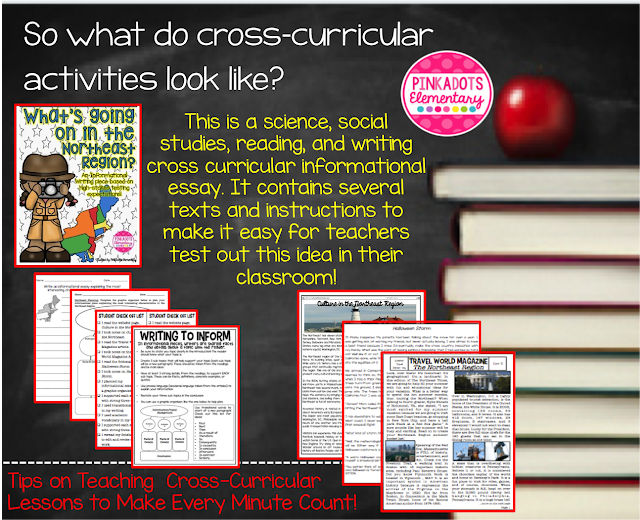
Tips on Teaching Cross-Curricular Lessons to Make Every Minute Count!

Cross-curricular projects help students construct knowledge, develop skills, and deepen understanding in a stimulating lesson interconnecting with a wide range of subjects. For example, math students use their writing, science, and technology classes to prepare them for constructing a bridge built out of tooth picks that will hold a bar of soap. As students research bridge designs, write plans for their project, and learn the physics behind bridge building they are becoming deeply involved in their work and learning how to solve real-world problems. Of course, if we are talking Common Core State Standards, these projects cover a wide range of standards and allow students to master some and go above and beyond on others.

Cross- curricular lessons do not have to be giant projects. They can be as simple as using an article about the water cycle in reading class to focus on note taking, close reading, or even main idea and supporting details. You could focus your guided reading time on nonfiction texts with Science or Social Studies themed books. Start simple and test it out with your class or even a small group.


Collaboration is key. Is your school departmentalized? This year I am teaching Science and Social Studies, but Robyn is teaching Reading and Writing. We plan on checking in with one another on the current unit, skills, and standards we are covering and overlap them as much as possible. In order to get the most out of a lesson, as a teacher, you need to communicate. Talk to your students about what they are learning, talk to your colleagues about what they are teaching (sometimes you will get two different answers... haha), talk to you curriculum instructors or coaches about how they can assist in the process. By talking out ideas, they can develop into amazing lessons and learning experiences.

As you become more confident in your cross-curricular lessons, you will notice, the more planning and thought you put into your lessons, the better they will be. I find it helpful to write down the themes or big ideas that each content class is covering and then think to myself, "How can I combine these?" Sometimes the ideas are so FAR FETCHED, it is impossible to combine, but other times you'd be surprised at how well it flows. However, if content does not match at all, it never hurts to review information or pre-teach content for students to gain important background knowledge, especially on difficult topics!

My husband is a middle school Physical Education teacher and I hear about him incorporating ELA and even Math standards into his lessons all the time. Are you working on visualizing? Have students write descriptive passages and read them to the class. If students are working on water-colors in Art class, they can use them to illustrate the imagery that they picture from the passages. Are you working on teaching angles in Math class? Talk to the PE teacher. I've seen students play freeze tag, but instead of just "freezing" they had to freeze forming the angle the teacher called out. The possibilities are endless!

https://www.teacherspayteachers.com/Product/Northeast-Region-Informational-Writing-Based-on-High-Stakes-Testing-Expectations-2016988

I am SO excited to have finished this product just in time for back to school. I worked with ELA, Science, and Social Studies content to develop this cross-curricular writing activity that is PERFECT to prep your students for high-stakes testing expectations.

This product is a great way to cover Social Studies, Science, Reading, and Writing all in one. It is the definition of cross-curriculum teaching and will definitely hold your students interest as they read a website, magazine article, and fictional story (all written by me) based on culture, climate, and landmarks in the Northeast Region.

https://www.teacherspayteachers.com/Product/Northeast-Region-Informational-Writing-Based-on-High-Stakes-Testing-Expectations-2016988
These 21 pages include everything a teacher needs to get his/her students writing. Not comfortable with writing standards? There is a page that can be blown up for an anchor chart or even shrunk for a student notebook. A student check list, a graphic organizer to use as a plan, note pages, writing paper, three multi-page articles, and much more all come together to help you connect the content areas. 

I'm not going to lie, at first, you will probably hear, why am I doing this in here? This is Science, aren't we in Reading class? But when you notice student knowledge being carried over into the content areas, you will feel like a million bucks! :) 

Have you tried Cross-Curricular activities in your classroom? I'd love to hear your success stories!